// Preserving Wealth Across Generations
Demystifying CPF
A short guide to how CPF works
17th July, 2026
|
|

Myth 1: I can use my CPF OA to repay my education loan.
Truth: No, you cannot do so. CPF OA savings cannot be used for repayment of amounts withdrawn under the CPF Education Loan scheme.
CPF savings are primarily meant for your retirement needs. Allowing the use of CPF OA savings to repay an outstanding education loan would cause a premature drawdown of your own CPF savings.

Myth 2: I have complete freedom to invest in any financial instrument that I want to with my CPF savings.
Truth: CPF savings can be utilized within specific investment schemes, such as the CPF Investment Scheme (CPFIS) and the Special Discounted Shares (SDS) Scheme, which is limited to discounted Singapore Telecom (Singtel) shares offered in 1993 and 1996.
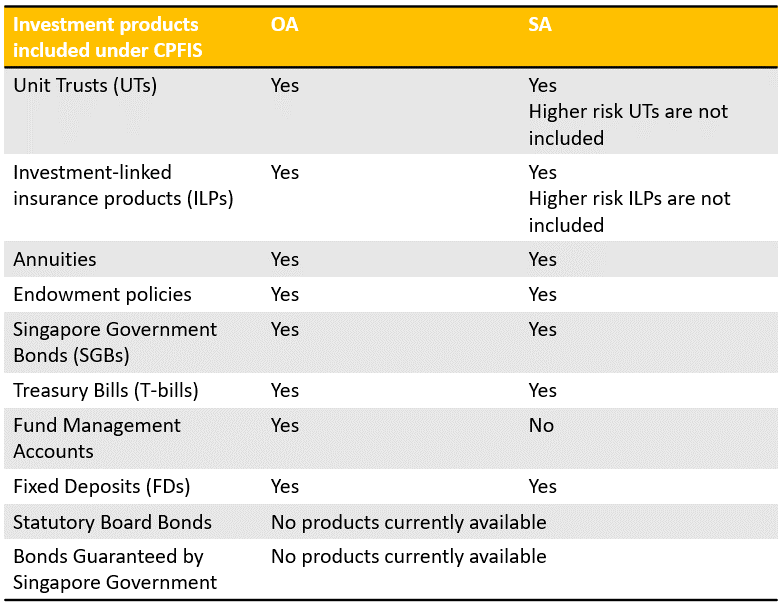
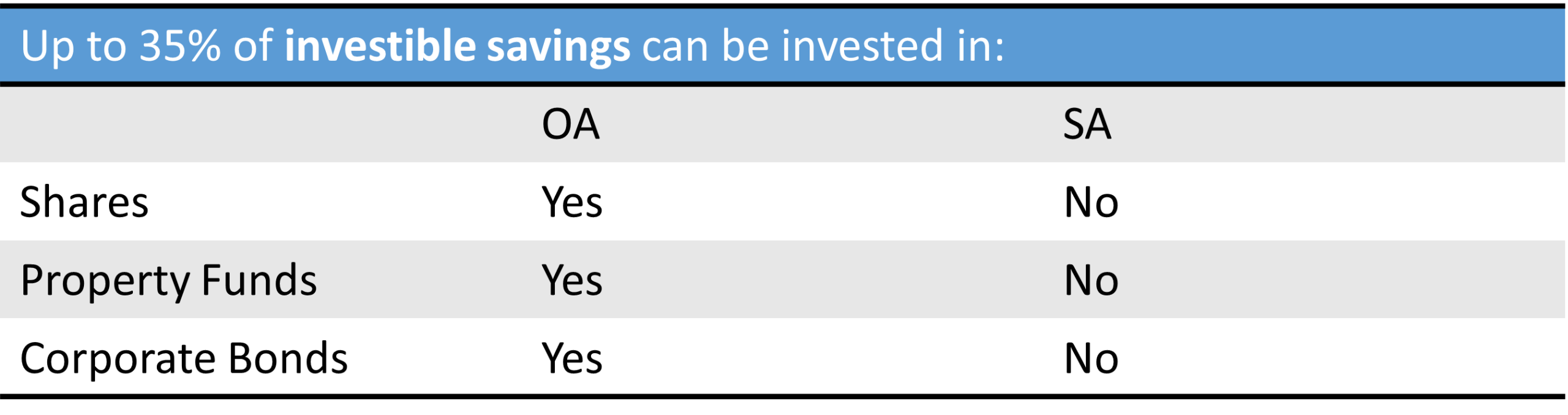
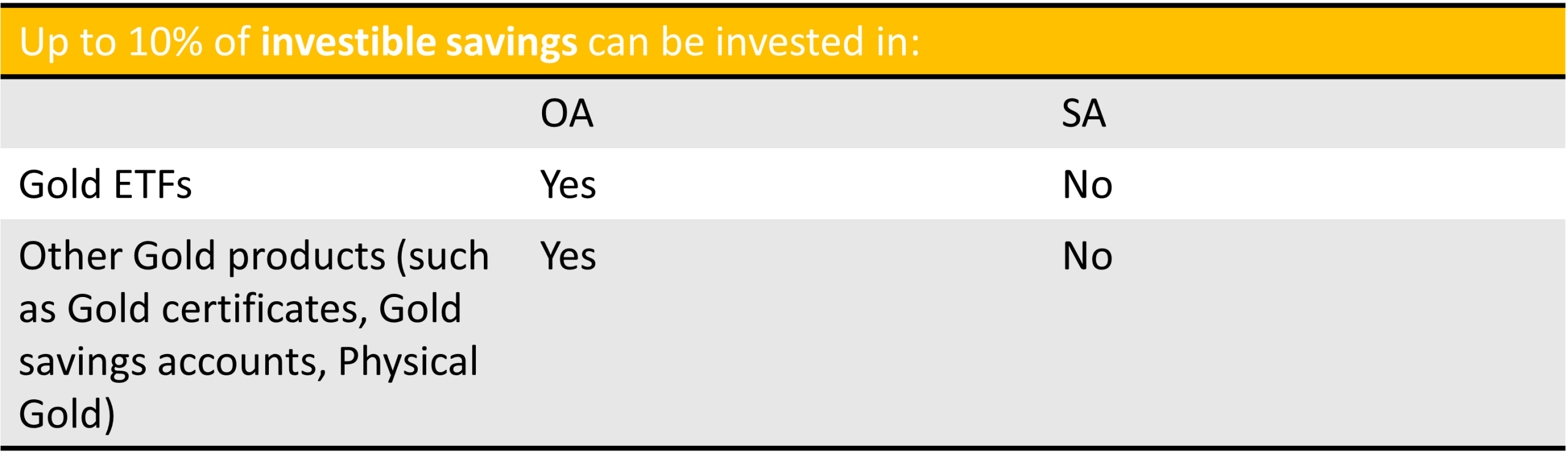
While CPFIS provides a range of investment options using CPF Ordinary Account (OA) and Special Account (SA) funds, it is important to note that not all financial instruments are eligible. Under CPFIS, eligible investment options include unit trusts (UT), investment-linked insurance plans (ILP), Singapore Government Bonds, Treasury Bills, shares, and Gold Exchange Traded Funds (ETFs).
It is important to take note of the allocation limits. The specific allocation limits may be subjected to changes, and you should refer to the CPF website for the latest guidelines. Before you invest your CPF savings, it is crucial to consider these allocation limits, along with your risk tolerance, investment objectives, and the CPF guidelines. Doing so will help you make informed choices and ensure that your CPF savings are appropriately managed for both your current and future financial needs.

Myth 3: I have to liquidate my CPF investment at 55 if I do not meet the Full Retirement Sum.
No, your CPF investment will not be liquidated! If you are unable to set aside your Full Retirement Sum (FRS) in the RA when you turn 55, your investments remain fully invested under the CPFIS. Only upon your decision to sell or liquidate your investments, the sale proceeds will be credited to your CPF Investment Account for CPFIS-OA or Special Account for CPFIS-SA.

Myth 4: I’ll have to top up the difference to CPF when I sell my house at a loss.
No. If the selling price after paying your outstanding home loan is not enough to cover the required CPF refund, you do not need to top up the shortfall in cash if you sold your house at market value.

Myth 5: I can use all my CPF OA savings to pay for my house.
This is only true if you are taking a HDB loan to purchase a BTO or Sales of Balance flat. Otherwise, there are requirements to fulfil before you are allowed to use your CPF OA savings to finance your property purchase.
The very first requirement is the remaining lease of the property covers the youngest owner, who is using his or her CPF OA savings, till 95 years old. If this condition is not fulfilled, there will be restriction to how much CPF OA savings that can be withdrawn for the property.
Other factors include
- Are you planning to take a loan, if yes, what type of loan?
- Type of property purchase
- Any existing property financed with CPF OA savings
There are tools on the CPF website that can work out an estimation for you. Of course, it is imperative to consult a professional before you commit to buy a property.

| |

Myth 7: I can distribute my CPF savings by a Will.No. Under the Central Provident Fund (CPF) Act, CPF monies do not form part of an individual’s estate and hence, not covered by a will. If you want to specify who will receive your CPF monies, and how much each person should receive, then you should make a CPF nomination. | |

Myth 8: I can only use my Medisave savings for the hospitalisation bill.
No. You can use Medisave for the following:
1. To stay healthy
Recommended screening tests, vaccinations and chronic disease treatments
2.When you welcome your baby
Treatments to help with conceiving, pregnancy and delivery expenses
3. When the doctor advises you to undergo some diagnostic tests
Medical scans such as CT scans and MRIs
4.When you fall ill in old age
Flexi-Medisave for outpatient medical treatment when you’re aged 60 and above
5. For surgery or hospitalisation
Inpatient treatment costs incurred at a hospital for yourself and your dependents
6. When you need repeated treatment
Renal dialysis and treatment for cancers and other conditions
7. For rehabilitation and recovery
Stays at community hospitals or rehabilitation at day rehabilitation centres
8. For end of life care
Palliative care at hospice or at home
9. For long term care
Cash withdrawals of up to $200/month for long term care needs for those who are severely disabled
10. To fund insurance premiums
For Medishield Life, Integrated Shield plans, Eldershield/Careshield Life and Eldershield/Careshield Life supplements

Myth 9: I am paying premiums for duplicate coverage for Medishield Life and Integrated Shield Plan.
This is definitely not true. You are not paying double premiums for your MediShield Life and Integrated Shield Plan (IP) and of course, there is also no duplicate in coverage. An IP consists of a MediShield Life component and an additional private insurance coverage component.
When you pay premium to an insurance company, the insurance company will take a portion of your premium to pay CPF Board for the MediShield Life coverage. Similarly, when you submit a claim to your insurance company, your insurance company will liaise with CPF Board to “co-share” the claim amount paid out.

Myth 10: There is no limit to the amount of savings I can use to join CPF LIFE.
The maximum amount of CPF savings that you can use to join CPF LIFE is the prevailing Enhanced Retirement Sum (ERS), a sum set at three times the Basic Retirement Sum, plus any accumulated interest in your Retirement Account.
CPF LIFE is the national annuity scheme in Singapore that provides a monthly payout for life starting from a chosen payout age. While joining CPF LIFE allows you to convert a portion of your CPF savings into a lifelong income stream, there is a cap on the amount of savings that can be used. The Full Retirement Sum (FRS) or the Basic Retirement Sum (BRS) determines the amount of savings you can use to join CPF LIFE. The FRS is adjusted yearly and represents the recommended retirement savings amount, while the BRS is a lower threshold option. The specific FRS or BRS applicable to you depends on your birth year.
It’s essential to note that any savings in excess of the FRS or BRS will remain in your CPF accounts, and you can continue to earn interest on those funds. The excess savings can be withdrawn partially or fully after reaching the payout eligibility age or used for other approved purposes, such as housing or healthcare needs.